
Mapping the unseen: how Europe is fighting back against invisible soil pollution

Article

Across Europe, scientists and citizens are uncovering a hidden legacy of contamination beneath their feet. From Denmark’s first PFAS crisis to a new generation of soil-mapping initiatives, a continent is learning to see - and stop - the pollution it once ignored

Date of publication:
Nov 20, 2025

By Katalin Tornai

The ground beneath our feet can hide pollution. How can we map and prevent contamination?
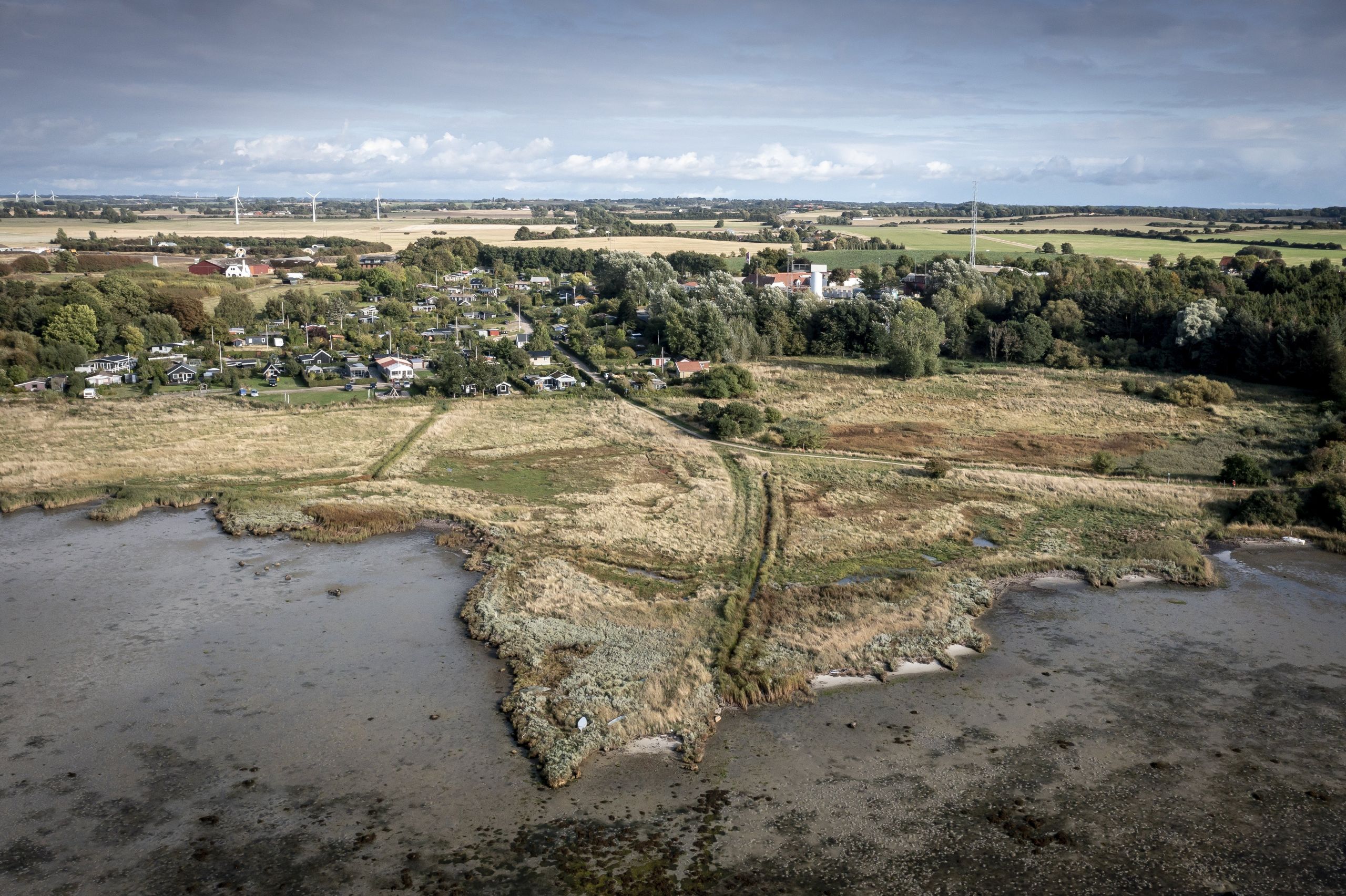
Before 2021, Korsør was known mostly as a quiet, picturesque town on Denmark’s western coast — a place of grazing cows and calm waters. Few imagined it would become the epicentre of the country’s first PFAS contamination. At the time, almost no one in Denmark had even heard of PFAS, the so-called “forever chemicals”. If you Googled it, you got five hits. “Before our contamination, PFAS didn’t exist as a subject in Denmark,” recalls Kenneth Nielsen, a local biology teacher and former chairman of Korsør Cow Grass Association.
The discovery was made almost by coincidence. “A journalist called me asking if I had heard something about contamination of the ground where our cows were out in the summer,” Nielsen says. “I said, I have no idea what you’re talking about.” The cows grazed on land near a firefighting training site. It was later found to be heavily polluted with PFAS foam residues that had seeped into the soil and water for decades. Nielsen offered to have his meat tested. A week later came the call that turned their lives upside down and changed the way Denmark is treating forever chemicals.
They told him the test results of the meat: “It’s bad. It’s really, really bad. You can’t eat that meat. It’s not suitable for human beings, not even animals.” The city authorities quickly confirmed the results and issued warnings, but no one could explain what PFAS really was, or what risk it meant for those who had eaten the meat. “It was the most terrifying weekend I’ve ever had,” recalls Nielsen. “You just sit there thinking, what have we done to our families?”
He called his doctor on Monday, only to get a surprising answer. “I said, I have PFAS in my body — what should I do? And she said, ‘I can’t help you.’ Nobody knew what PFAS was or how to treat it. We were left alone.”
Nielsen did not give up; his persistent search for answers from the authorities and doctors is part of the reason why we know more about PFAs today.
From local tragedy to European
What started with a single steak from a family freezer soon became a national, then continent-wide wake-up call. “PFAS are mobile, persistent and toxic substances,” explains Hans Peter Arp, an environmental chemist at the Norwegian Geotechnical Institute and the Norwegian University of Science and Technology. “They are often called forever chemicals because they don’t break down naturally and can accumulate in animals, plants and humans over time, spreading silently through soil and water.” “In soil, they don’t degrade,” adds Arp. “If no action is done, they’ll be there beyond our lifespans — and our children’s. Unlike oil spills or metal pollution, PFAS contamination is invisible. “It’s not like an apocalyptic landscape,” Arp adds. “PFAS goes into the plants, but it doesn’t kill them. You can’t see it, but the animals — and the people — are contaminated.”

Searching for solutions
The Korsør crisis compelled Denmark to act — and drew European scientific attention. Across Europe, estimates suggest 60 percent of soils are unhealthy, making such efforts vital. Within ARAGORN, an EU project addressing soil contamination and remediation, Korsør is considered a “zero site” — a starting point for learning how to clean up and prevent similar contamination elsewhere.
“Our approach is co-creation,” says Arp. “We work with local experts, community members, and site owners to identify their concerns and goals. Then we combine that with our technical expertise to find a pathway forward.” Xenia Trier, ARAGORN’s coordinator, says the project is part of a broader European soil mission aimed at achieving healthy soils by 2050.
“Soil sits at the interface between where we live and have our activities, it supports our food production, it’s above water,” she explains. “If we want to combat contamination, we must first avoid adding new pollution — but also deal with what’s already there. Prevention is key, but so is reducing risk for people and ecosystems.”
That means mapping hotspots, prioritising urgent areas for remediation, and testing different methods before any large-scale work begins. “There’s no one-size-fits-all solution,” Trier says. “Decisions must include the people who actually live on the land. Co-creation ensures solutions are realistic, effective, and fit for purpose.”
“Without community involvement, it might not be a success,” Arp who also works within the ARAGORN project stresses. “You can’t just come in and fix it — you have to work with the people who live with it.”
A European effort
The lessons from Korsør are now shaping European policy. The European Union aims to phase out PFAS from firefighting foams, textiles, packaging, and even some industrial systems.
In October 2025, the EU adopted its first Soil Monitoring and Resilience Directive — a law requiring Member States to track soil health and map contaminated sites. ARAGORN supported it in various ways, for example, they helped with proposals on which chemicals should be regulated and what should be the principles behind it.
“We’re still at the beginning” says Trier. “We need a harmonised framework so that countries act consistently — not just where contamination has already been found, but to prevent new cases. If one law says one thing and another says the opposite, it frustrates land managers and slows down action. Harmonised, realistic regulation is crucial if we want to make progress.”
Prevention is the central playfield
“Factories that make PFAS need to reduce their emissions, or, ideally, stop making PFAS, make something else,” Arp says. “Some industries say they can’t replace PFAS in certain uses. But others can be restricted as soon as possible — like fluorinated gases or textiles in clothing. These are the things that we have to reduce right away.” Meanwhile, scientists are mapping dozens of sites across Europe that may already host PFAS pollution — a process inspired by The Forever Pollution Project’s cross-border investigation. “Mapping is essential if we want to act efficiently,” says Trier. “It helps us see where the problems are, and where intervention matters most.”
A high price for awareness
Four years on, Korsør remains a warning and a lesson. The land is monitored, and some remediation trials have begun, but for residents like Kenneth Nielsen, the emotional and physical impact endures. “I’ve eaten this meat for 17 years,” he says. “You can’t see PFAS, you can’t smell it — but it’s in us. It changes how you look at your home, your food, even your country.” He keeps speaking out, hoping it helps others avoid the same fate. “If our story means no one else has to go through this,” Nielsen adds, “then at least something good came out of it.” Stories like Nielsen’s and his community are a reminder of what is at stake. “Science and regulation can feel abstract, it may just be like numbers” Trier says. “But when you listen to people in places like Korsør, you see the human impact”.


Featured image by Honza Resnick on Unsplash
 

Aragorn joins CEN/TC 444 WG3 experts to advance a European standard for Extractable Organic Fluorine (EOF)

News

On 30 September, Aragorn met with technical experts from CEN/TC 444 Working Group 3 in Prague to exchange experience and discuss the feasibility of developing a European standardised method for Extractable Organic Fluorine (EOF), a screening measure intended to capture a broader fraction of PFAS than targeted analyses alone.

Date of publication:
Oct 24, 2025

The meeting brought together experts from both Aragorn and CEN/TC 444 WG3, including Anna Kärrman and Eirik Aas from Aragorn, and Kristof Tirez, Jean-Philippe Ghestem, and Laure Pommier from the CEN working group. Participants contributed complementary experience from academia, research institutions, and industry laboratories, fostering a well-rounded discussion on EOF standardisation.

Key points included:

  • Scope and purpose: EOF is intended as a screening method to indicate the total PFAS burden in soils and other solid matrices, complementing targeted analyses rather than replacing them.
  • Technical discussions: Aragorn presented experimental data highlighting critical aspects such as matrix selection, extraction efficiency, repeatability, detection limits, and robustness across laboratories.
  • Interlaboratory study: Participants agreed on launching a joint interlab study to assess method performance and reproducibility, a crucial step toward a validated European standard.
  • Next steps: Continue collaborative technical work within CEN/TC 444 WG3, finalise the interlab study design, and collect additional experimental data to support standardisation.

Aragorn is proud to contribute actively to the European standardisation of EOF, working alongside CEN experts to develop a robust screening method that complements targeted PFAS analyses and supports comprehensive monitoring of contaminated soils across Europe.

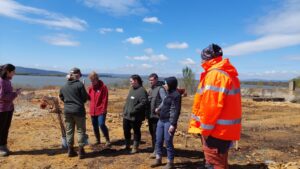
 From the left: Anna Kärrman, Laure Pommier, Kristof Tirez, Jean-Philippe Ghestem, Eirik Aas

From the left: Anna Kärrman, Laure Pommier, Kristof Tirez, Jean-Philippe Ghestem, Eirik Aas

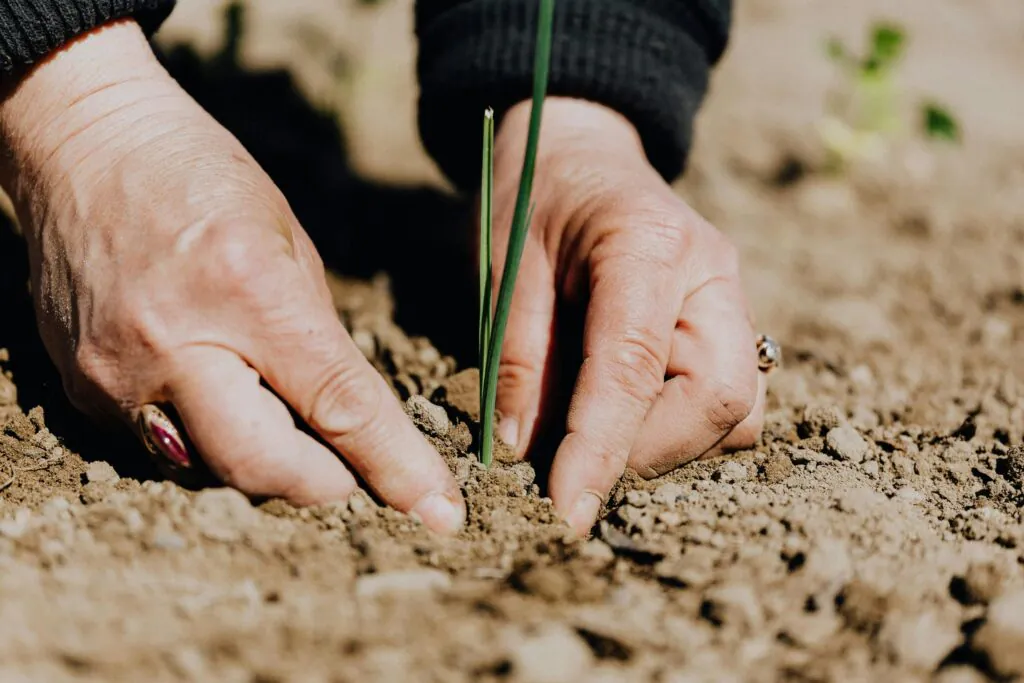
Featured image by Karola G on https://www.pexels.com/it-it/foto/natura-donna-mano-terra-4207908/

GM9 – When Stones Come to Life: Young Hands Nurturing Nature in Moldova Nouă

News

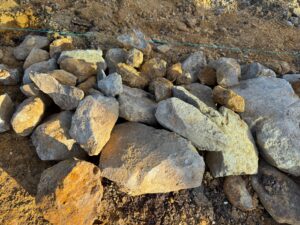
In Moldova Nouă, students and researchers joined forces to bring new life to degraded soils through "GM9 – When Stones Come to Life", an activity under the ARAGORN project. Combining science, community engagement, and youthful enthusiasm, the initiative turned a rocky plot into a living classroom — a small but powerful lesson in regeneration and hope.

Date of publication:
Oct 24, 2025

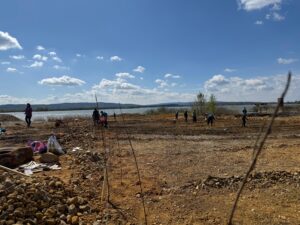
On April 12, 2025, in the stony, once-barren lands of Moldova Nouă, students from the “Clisura Dunării” Technological High School, guided by researchers from the Faculty of Biology and Geology, Babeș-Bolyai University, took part in “GM9 – When Stones Come to Life”, an educational and experimental activity under the ARAGORN project. The initiative aimed to reconnect young people with soil, nature, and the rhythms of life through hands-on environmental restoration.

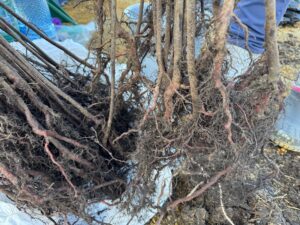
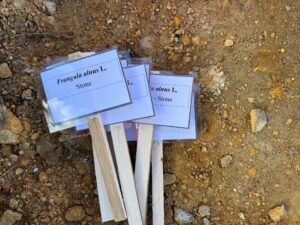
Armed with enthusiasm, 24 students, 4 teachers, and a parent worked side by side to prepare degraded soils, applying treatments such as biochar amendments, beneficial bacteria, and organic fertilizers, before planting native and adapted species, including buckthorn (Frangula alnus L.) and fig trees. Neat micro-plots began to rise from the stones.

A follow-up visit on May 8, 2025, revealed fragile yet determined green shoots, the first signs of regeneration emerging amid the stony soil. The activity not only offered a hands-on lesson in nature-based soil remediation, but also strengthened the connection between youth, science, and community, fostering interdisciplinary learning and co-creation with local stakeholders.

As the students reflected, GM9 is more than a project — it is a lesson in courage, patience, and collaboration. Where stones once dominated, life now begins to awaken, reminding us that with knowledge, care, and a touch of poetry, even the hardest soil can become fertile ground for growth.

“Plant a thought, water it with actions, and it will bloom within you.”


Featured image by Wolfgang Hasselmann on Unsplash


Euronews Tech Talks explores PFAS pollution in Zwijndrecht, Belgium

News

A new episode of Euronews Tech Talks sheds light on the human and scientific challenges of tackling PFAS pollution

Date of publication:
Oct 1, 2025

A 17th September episode of Euronews Tech Talks investigates what it is like to live in one of Europe’s hotspots for PFAS contamination. This podcast episode offers listeners an insight into the issue by interviewing Jeroen Van Reeth, a resident of Zwijndrecht—the Belgian town affected by pollution linked to the chemical company 3M.

Jeroen has lived with his wife less than a kilometre from the chemical plant for twelve years, but only recently discovered the environmental and health risks associated with PFAS. These synthetic “forever chemicals,” characterised by strong carbon–fluorine bonds, are highly resistant to degradation. They have been widely used in products such as fire-fighting foams, adhesives and non-stick coatings like Teflon.

The episode delves deeper into the challenge of PFAS remediation with contributions from two experts: Hans Peter Arp, from the Norwegian University of Science and Technology, and Madeleine Bussemaker, from the University of Surrey. They explain whether—and how—it might be possible to contain or destroy these persistent substances. Several soil treatment techniques are under study, from soil washing to the use of activated carbon, though both raise concerns about possible re-release into the environment. Research, however, is advancing, and new methods are being tested to achieve safe and cost-effective disposal.

One promising example is Mantisonix, a project co-founded by Arp, which has developed an ultrasonic technology designed for the complete, efficient and sustainable destruction of PFAS.

Projects like Mantisonix share the same mission as Aragorn: protecting soil health and developing science-based solutions to mitigate contamination.

Featured image by Ambuj Laroiya on Unsplash

ARAGORN releases the third issue of the newsletter

Newsletter

Discover the updates of the project in the last few months, and stay updated with the news!

Date of publication:
Sep 16, 2025

Welcome back to ARAGORN Newsletter!

This third issue is extremely rich in content: you will find several news releases from the past few months, focused on a variety of topics and events covered.

ARAGORN partners have been active in promoting the project results in multiple locations and events, and to establish a relevant presence in many important occasions, especially in Pezinok and Vienna.

Last May, partners have also met in person for a few days in Coronini, Romania, and you can read all about it.

ARAGORN was also co-protagonist of a successful social media campaign, “bringing soil contamination terms to life”: read all the cards to know more about soil contamination glossary.

Last but not least, don’t miss the newly launched video-interviews, shot in Romania and featuring ARAGORN’s coordinator and partners.

Keep reading here to delve into the latest updates and news from the project!

Featured image by Savannah Wakefield – Unsplash