
Organised by the SOLO project, the Soils4Europe Conference brings together researchers, policymakers, farmers and practitioners around a shared objective: achieving healthy soils in Europe by 2050, with a programme spanning the EU Soil Monitoring Law, Living Labs, agroecology, soil carbon, soil data stewardship and soil literacy.
ARAGORN is contributing at three moments during the week:
- A plenary presentation and panel debate on 7 September, led by coordinator Xenia Trier (Associate Professor, University of Copenhagen) with inputs from Eirik Aas (Eurofins) and Anna Kärrman (Örebro University);
- A project booth on 8 September, staffed by Ali Kanso and Sabine Azoury (Microhumus);
- On 11 September, the in-person meeting of the Soil Pollution and Remediation Cluster.
Which contaminants to monitor — and at what cost?
The point that emerged from Xenia Trier’s presentation is a practical dilemma at the core of the Soil Monitoring Law. Member States will have to monitor soil contamination, but soils can contain a vast number of substances and measuring all of them is neither feasible nor affordable — so contaminants must be prioritised.
ARAGORN’s methodology does this in two steps: first a risk-based score, drawing on each substance’s regulatory status, its toxicity to humans and the environment, and its likely exposure; then the cost of actually measuring it. The key insight is that much of the cost of laboratory monitoring falls per analytical method, not per compound, so substances sharing a method can be added at little extra cost. Grouped this way, ARAGORN’s analysis shows that around 20 substances could be monitored for roughly the cost of the nine highest-risk compounds alone — an estimated 84% more risk assessed for about the same budget.
Working with sister projects
ARAGORN does not tackle this alone. It co-leads the Mission Soil Soil Pollution and Remediation Cluster with EDAPHOS, connecting some seventeen Mission Soil projects and further EU initiatives, and has begun a joint article comparing prioritisation methodologies across the cluster, to be submitted in 2026. The 11 September cluster meeting carries this forward, convened by ARAGORN in co-creation with the Indicators and Monitoring Cluster and the Data and Knowledge Management Cluster.
It is a fitting shape for the project’s week in Coimbra: from setting out the science on Monday, to meeting the community at the booth, to working shoulder to shoulder with sister projects on Friday to turn that science into monitoring that Europe can actually use.
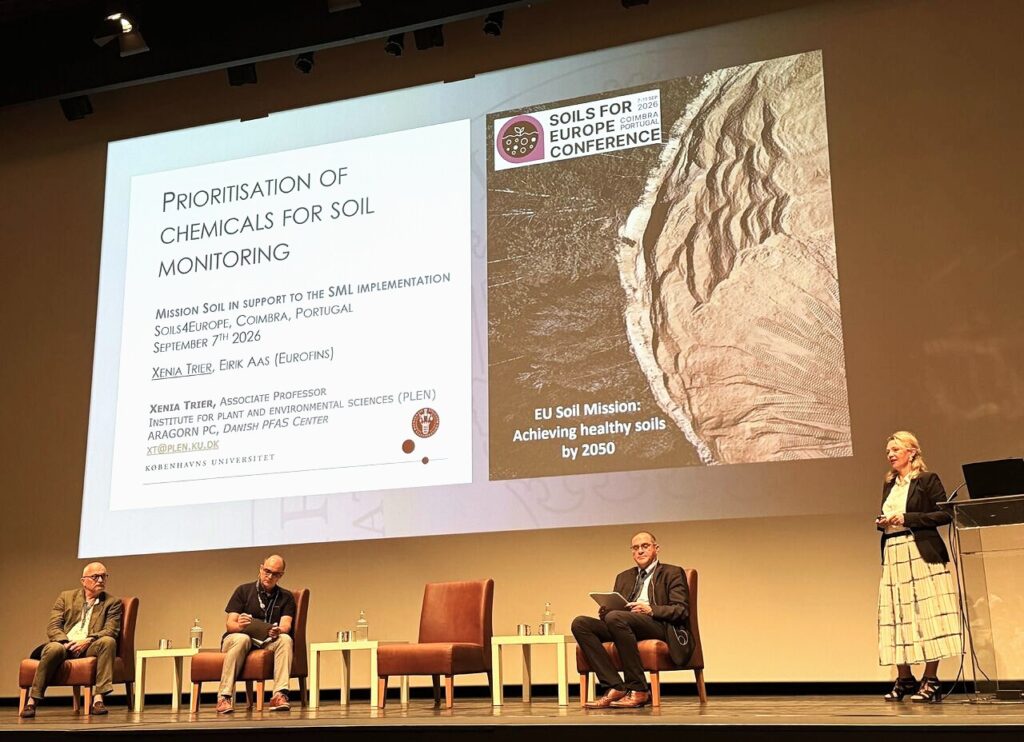
Project coordinator Xenia Trier at the Soils4Europe Conference
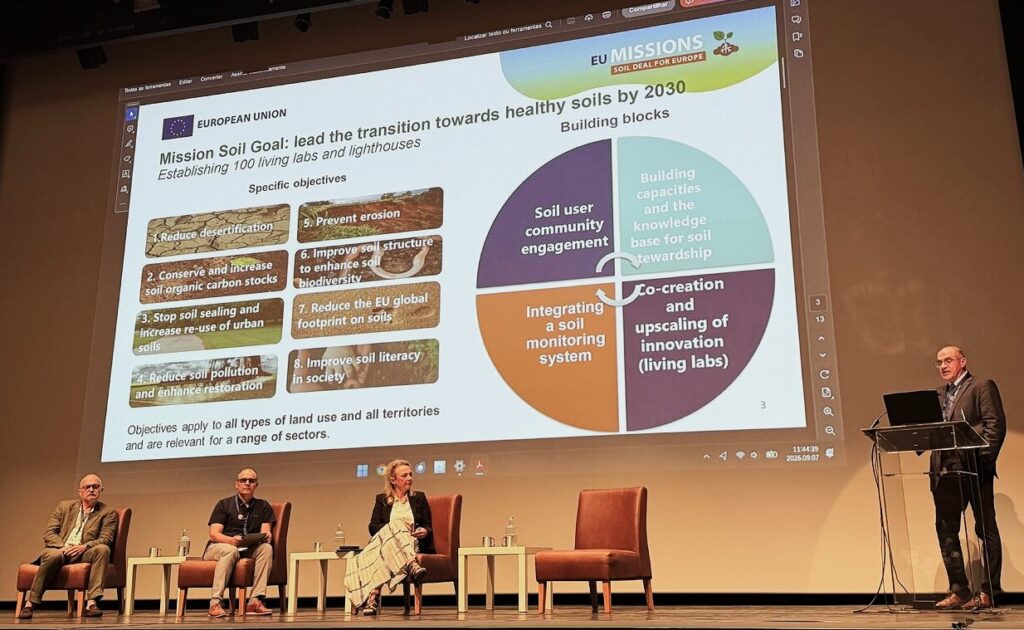
ARAGORN partners at the Soils4Europe Conference
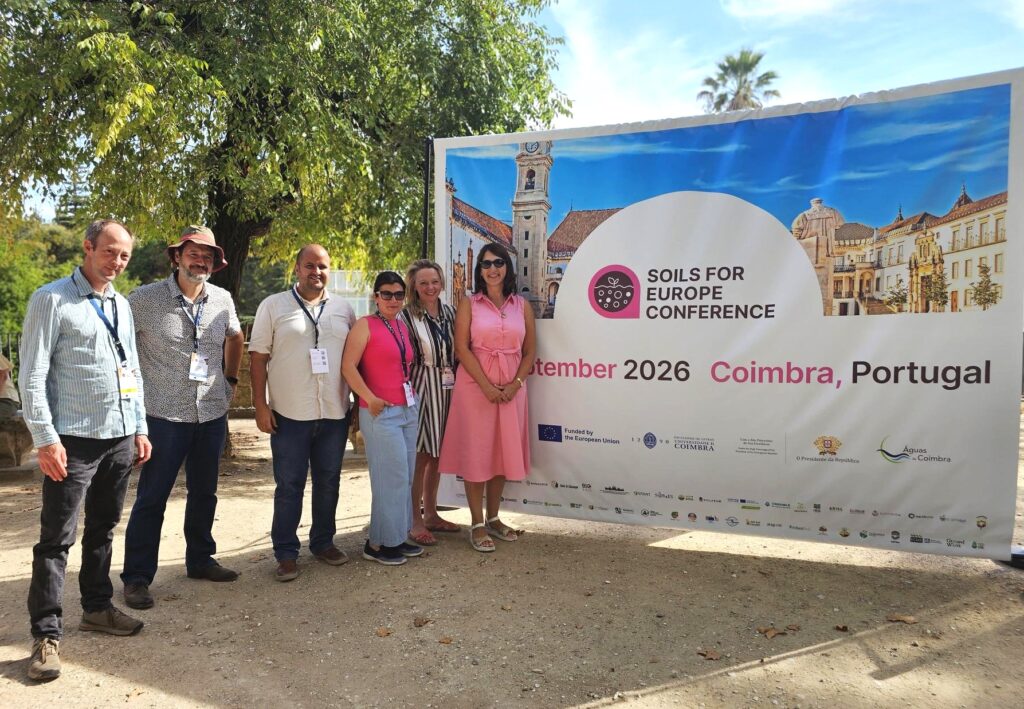
ARAGORN partners at the Soils4Europe Conference
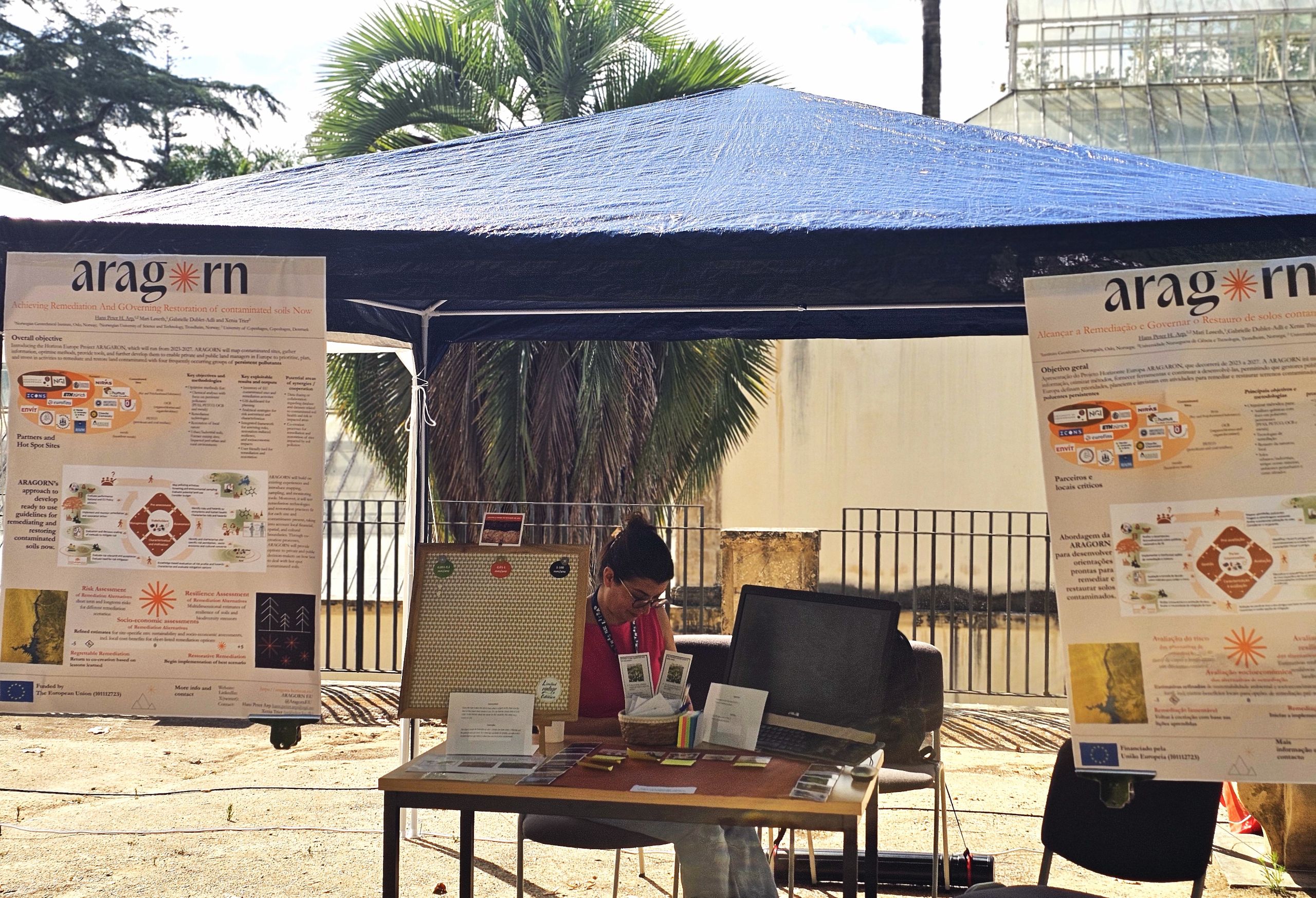
ARAGORN booth at the Soils4Europe Conference