
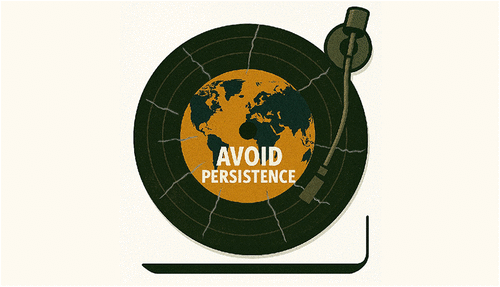
The article, authored by Martin Scheringer, Hans Peter H. Arp, and Ian T. Cousins, draws on the frameworks of the Limits to Growth and the Planetary Boundaries concept to explain how and why the unchecked extraction of resources and the impacts of toxic chemicals have persistently evaded effective legislative control.
Since the mid-20th century, scientific research has developed along two largely distinct yet complementary paths: one focused on atmospheric impacts, such as chlorofluorocarbons and stratospheric ozone depletion, and the other on aquatic and terrestrial ecotoxicology, addressing substances like DDT, PCBs, and other persistent, bioaccumulative organohalogens. These parallel tracks generated early scientific warnings, fostered international consensus, and ultimately led to landmark multilateral agreements, including the Montreal Protocol and the Stockholm Convention. Yet, despite the existence of a robust and mature body of scientific knowledge on planetary-boundary threats from chemicals, effective prevention has repeatedly lagged behind. The bottleneck, the authors argue, is not a lack of evidence, but the failure to translate that evidence into timely and decisive political action.
To overcome this impasse, the article calls for a step change in governance: stronger, institutionalised science–policy interfaces at regional, national, and international levels that ensure a continuous and structured integration of scientific knowledge into decision-making. Without such systemic reform, progress will remain incremental and reactive rather than preventive. As the authors warn, “Without systemic reform, scientists risk sounding like a broken record repeating the same messages across generations (e.g., ‘avoid highly persistent substances’), while inaction perpetuates global contamination.” The message is clear: the science is already there; what is needed now is the political will and the institutional mechanisms to act on it.