
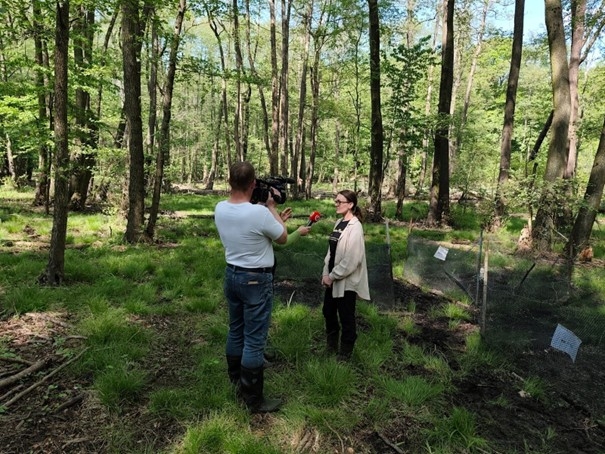
ARAGORN project was featured in an interesting video aired on national television in Slovakia, focused on Pezinok – a contaminated site that is part of the project research sites. Hana Horváthová and Veronika Špirová, who are actively working within the ARAGORN project, were interviewed in ordet to address long-standing environmental issues related to mining activity in Pezinok.
At the end of the 20th century, various ores and metal-beraing rocks, such as antimony and arsenopyrite were mined in Pezinok, particularly around the Budúcnosť adit, which ceased operations in 1993. However, significant environmental pollution remains due to mine waste and contaminated water still leaking from the adit.
Researchers from the Faculty of Natural Sciences at Comenius University in Bratislava proposed an innovative solution using industrial waste – specifically iron shavings and iron-rich sludge- to help reduce the spread of toxic substances. They created three test plots: soil mixed with sludge, soil mixed with iron shavings, and untreated soil (control plot).
These iron-based materials, which naturally bind heavy metals, are being tested to observe their impact on contaminated soil. Early results suggest that the plots treated with waste materials release less arsenic and antimony into soil water compared to the control. This indicates the potential of these materials to stabilize pollutants and limit their spread into surrounding soil, groundwater, and plants.
The researchers emphasize that both materials are industrial by-products, and this approach offers a way to repurpose waste while tackling environmental contamination. If long-term results confirm their effectiveness, this strategy could be implemented in real-world remediation efforts.
This brings a lot optimism about scaling the approach in the future, marking an important step in sustainable remediation practices.
Watch the full video here.
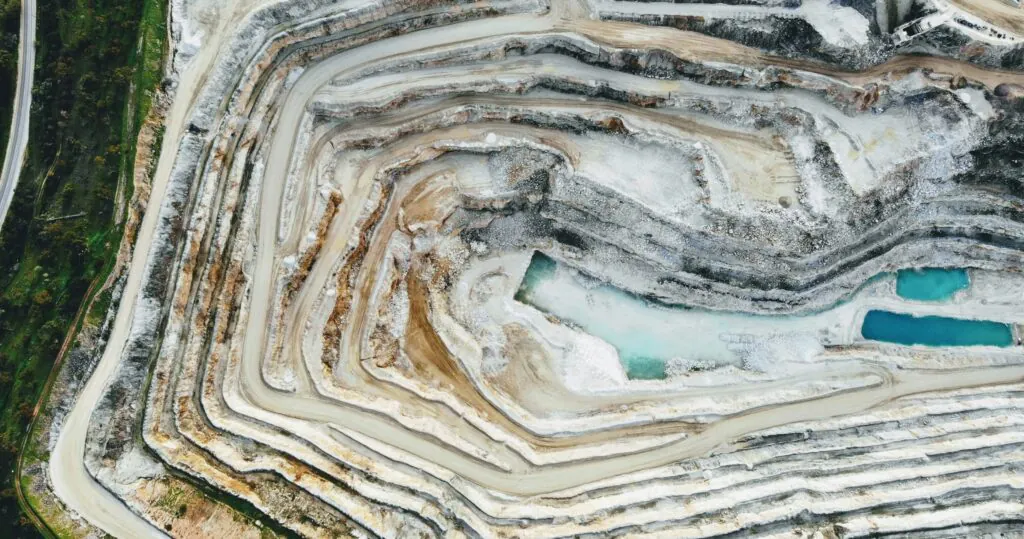
Featured image by Dion Beetson- Unsplash